
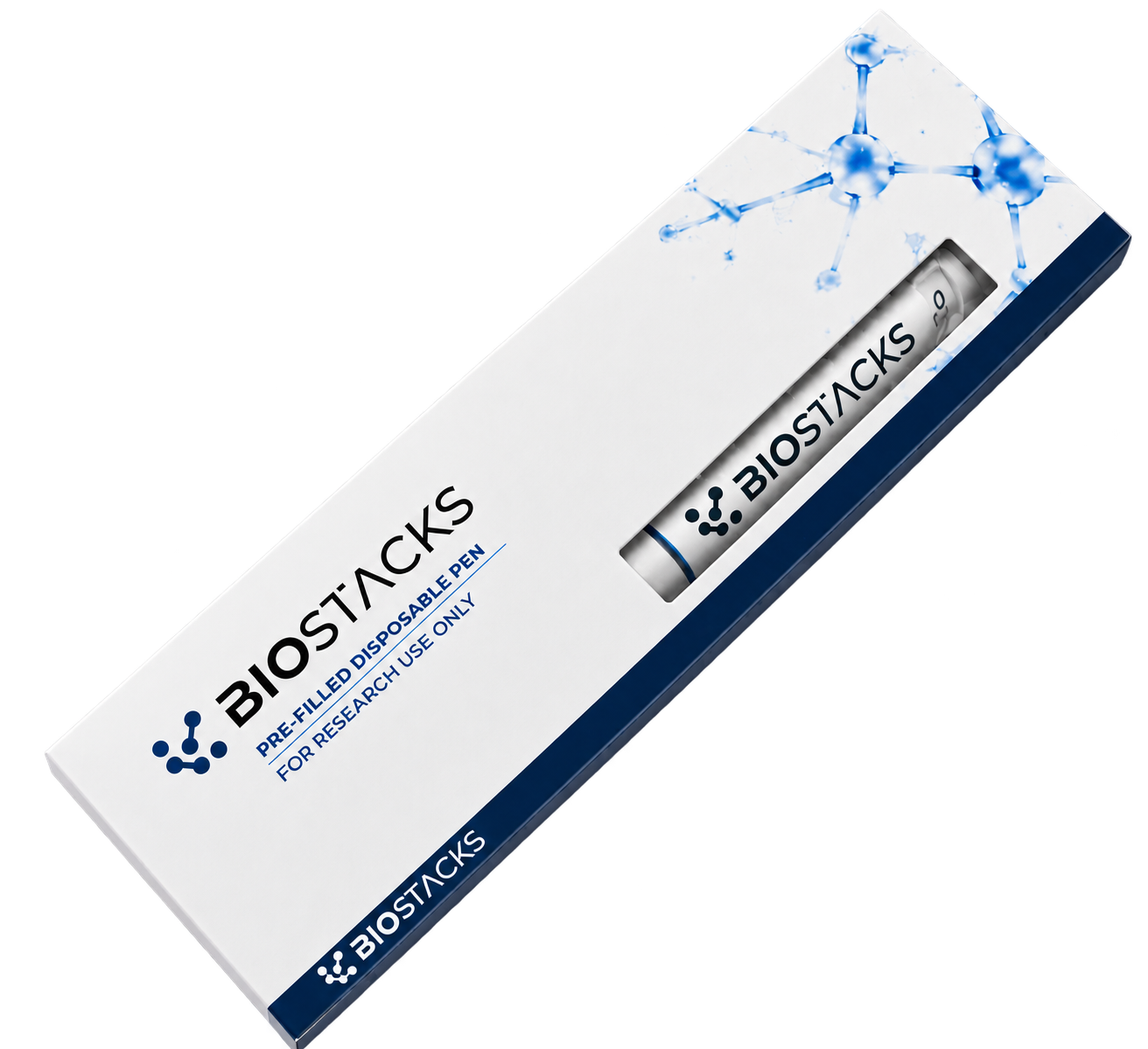
5-Amino-1MQ
"Metabolic Health Support"
Price
Size / Dosage
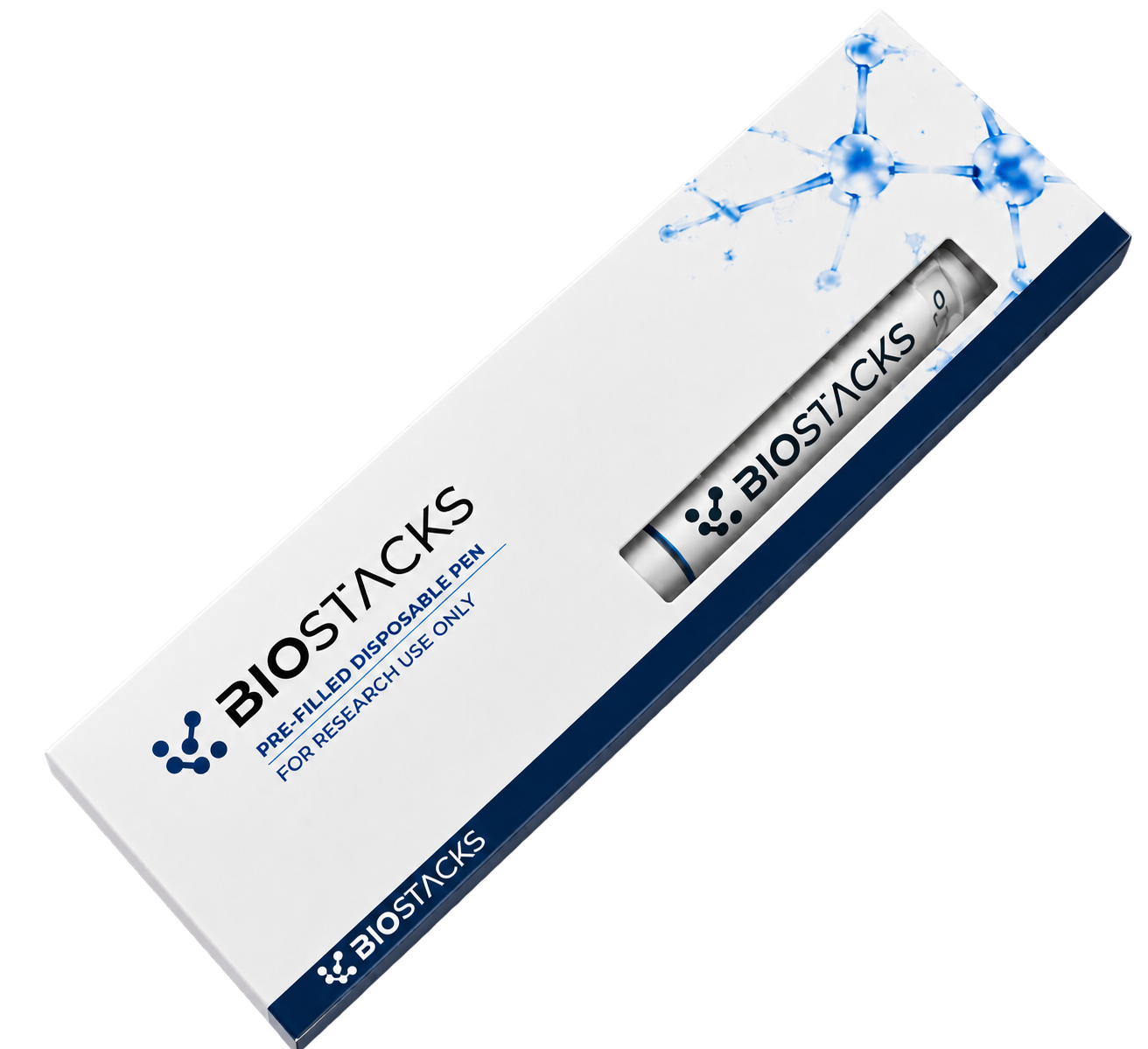
Available as a ready-to-use injectable pen — no mixing required.
Format
These products work well with 5-Amino-1MQ
Buy more, save more
Product description
5-Amino-1MQ (5-amino-1-methylquinolin-1-ium iodide, CAS 42464-96-0) is a synthetic quinolinium small molecule and selective substrate-site inhibitor of nicotinamide N-methyltransferase (NNMT), with a reported IC₅₀ of 1.2 μM. It is studied in vitro for its effects on the NAD⁺ salvage pathway, methionine cycle flux, and metabolic enzyme activity in cell culture models. Supplied by BIOSTACKS as powder for in vitro laboratory research use.
How to use it
Each vial arrives as lyophilized (freeze-dried) powder and must be reconstituted with bacteriostatic water before use in a research setting. Add the water slowly down the inside wall of the vial, then swirl gently until clear — never shake. Once reconstituted, keep it refrigerated and use within 28 days.
Open the step-by-step reconstitution guideStorage & stability
Sealed lyophilized vials are stable at ambient temperatures for 30 days and indefinitely at −20°C. After reconstitution, refrigerate at 2–8°C in the original vial and use within 28 days. Keep the vial out of direct light and avoid repeated temperature swings and agitation.
Quality & testing
Quality and purity tests are performed on random batches, covering identity (mass spec), purity (HPLC) and endotoxin results.
Browse our certificates of analysis →Shipping & returns
Orders placed before 3:00 PM ET on a business day are typically shipped the same day, in plain, discreet packaging; transit is estimated at 2–4 business days.
Read the full shipping policy →COA included
Every batch
Ships today
Order by 3PM
Free shipping
Orders over $300
About 5-Amino-1MQ
The primary mechanism of 5-AMINO-1MQ 10MG involves the potent, selective inhibition of the NNMT enzyme, which is often overexpressed in metabolic disorders. By blocking this enzyme, researchers can observe a significant shift in cellular methyl-donor availability. This inhibition prevents the conversion of nicotinamide into 1-methylnicotinamide, effectively “rescuing” the NAD⁺ salvage pathway. In advanced cellular assays, this has been shown to increase mitochondrial biogenesis and enhance the sirtuin-mediated stress response, as documented in prominent metabolic research databases.
Metabolic health: Preclinical data indicate that NNMT inhibition may reduce fat cell size and support improved insulin sensitivity and glucose tolerance in diet-induced obesity models.
Weight regulation: In mouse studies, systemic administration produced a progressive reduction in body weight and up to a ~35% decrease in white adipose tissue mass.
NAD⁺ and energy metabolism: Shown to increase intracellular NAD⁺ levels by up to 1.6-fold, supporting mitochondrial function and cellular energy production.
Anti-aging and longevity research: Elevated NAD⁺ availability is associated with reduced age-related cellular decline and improved muscle stem cell regenerative capacity.
Lipogenesis inhibition: Concentrations of 30–60µM reduced lipid accumulation in pre-adipocytes by 50–70% in controlled cell studies.
A defining characteristic of this research molecule is its high membrane permeability and metabolic stability. Unlike larger peptides, this small molecule can rapidly traverse the lipid bilayer of adipocytes to engage its intracellular target. Mapping these pathways allows researchers to gain a deeper understanding of cellular resilience and structural preservation over multi-day periods. To maintain the highest data fidelity, researchers should cross-reference their batches with our extensive peptide library to ensure consistency across comparative longevity studies.
Related peptides
Customers also viewed
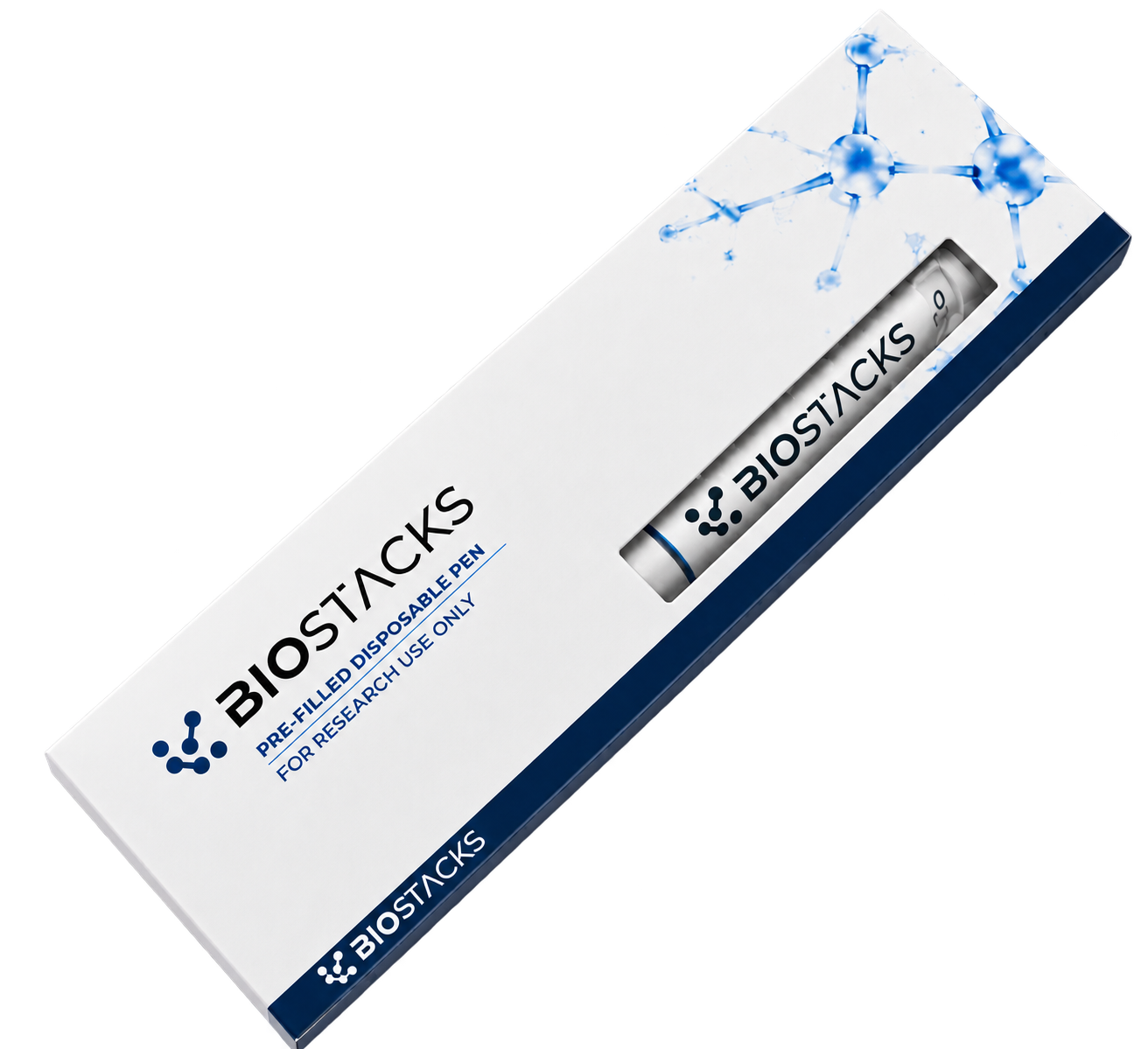
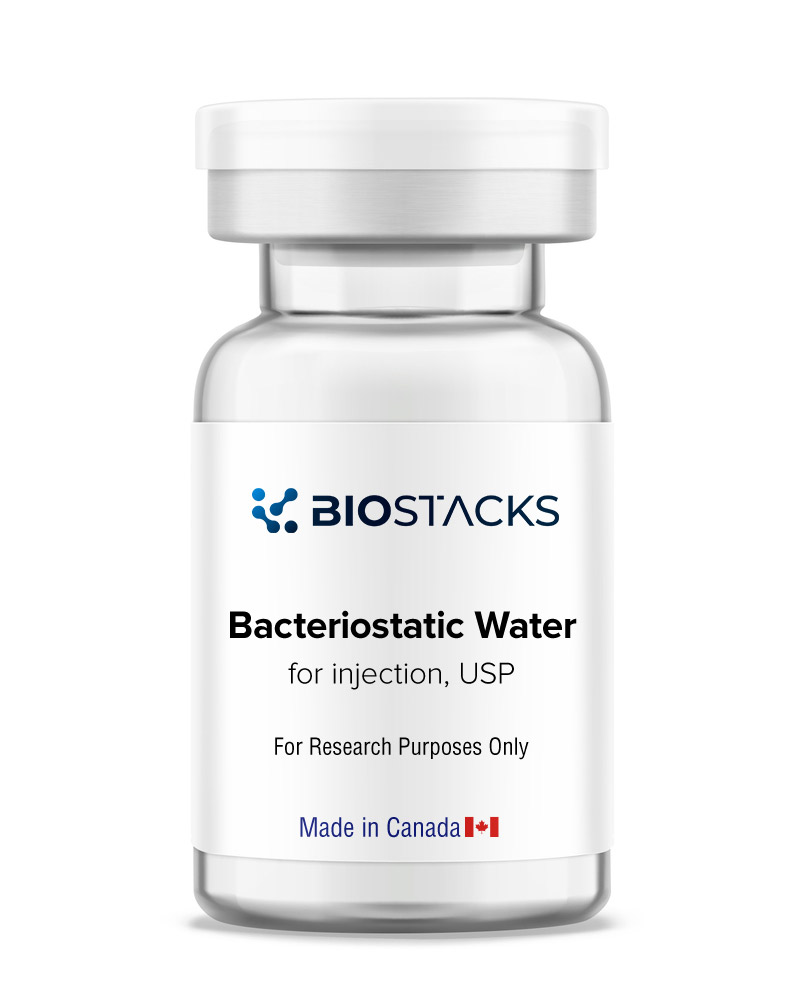
"High Pure Diluent for Precise Reconstituting Sensitive Compound"
FAQ
Common questions
Each vial contains lyophilized peptide, sealed under vacuum with a butyl stopper and aluminum crimp cap. Bacteriostatic water is sold separately.
Store the sealed vial at 2–8°C in a dark environment. After reconstitution, keep refrigerated and use within 28 days.
Yes — every batch ships with a signed COA showing HPLC purity, mass spec confirmation, and endotoxin results. Download the sample COA above.
Larger vials offer the same peptide at a lower per-mg cost. Reconstitution volume scales linearly with size.