
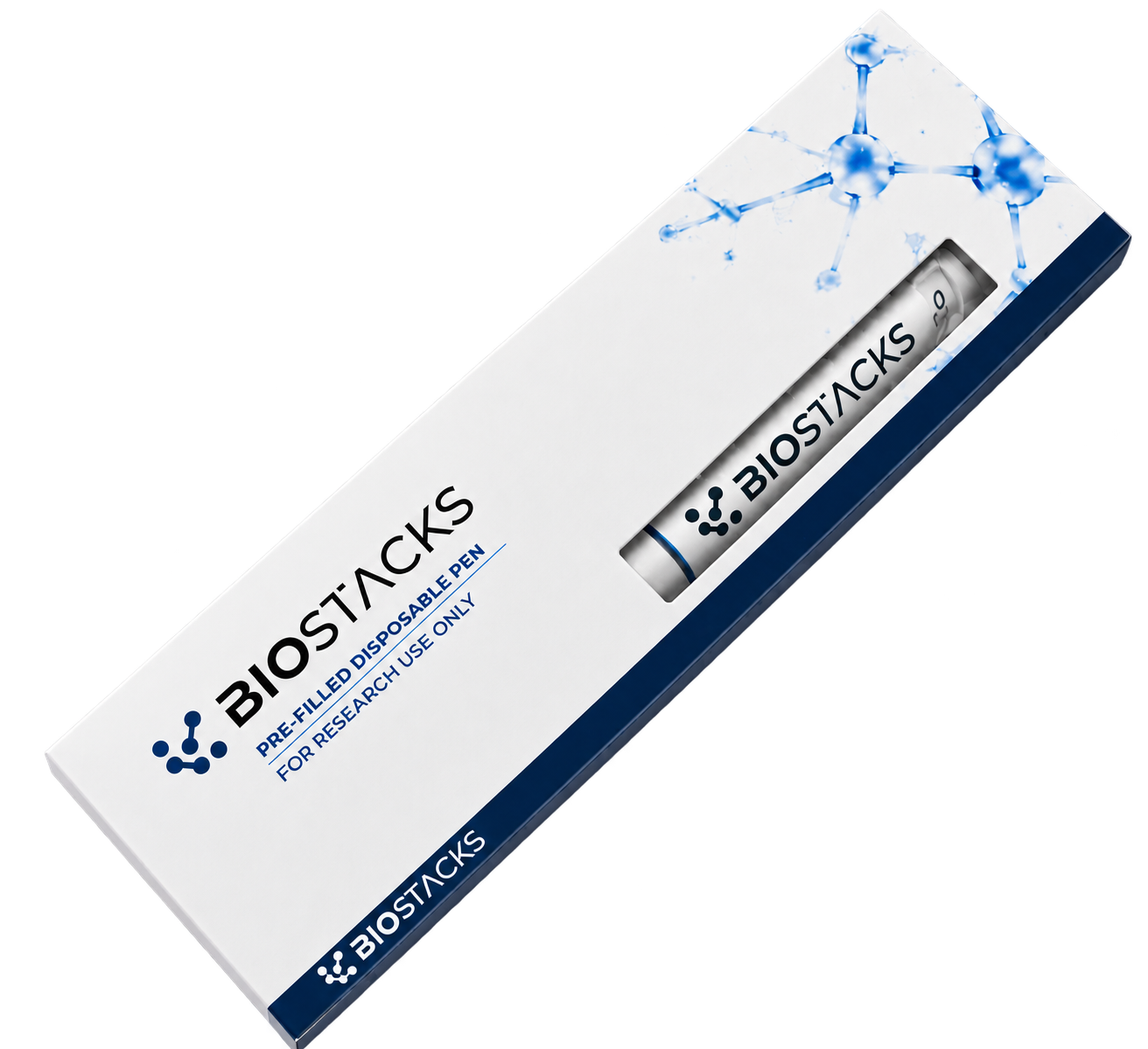
Tesamorelin
"Advanced Body Recomposition and Visceral Fat Support"
Price
Size / Dosage
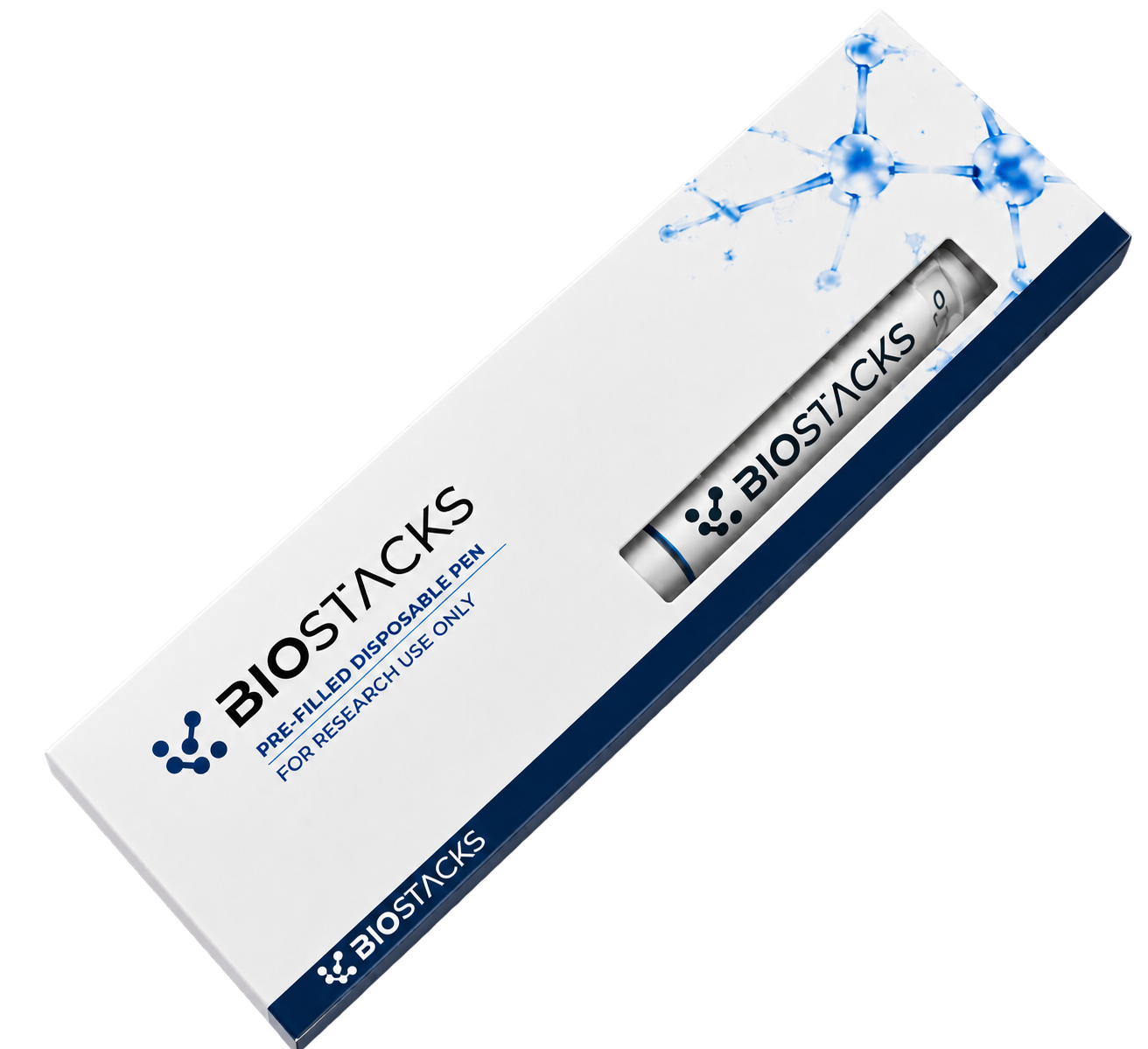
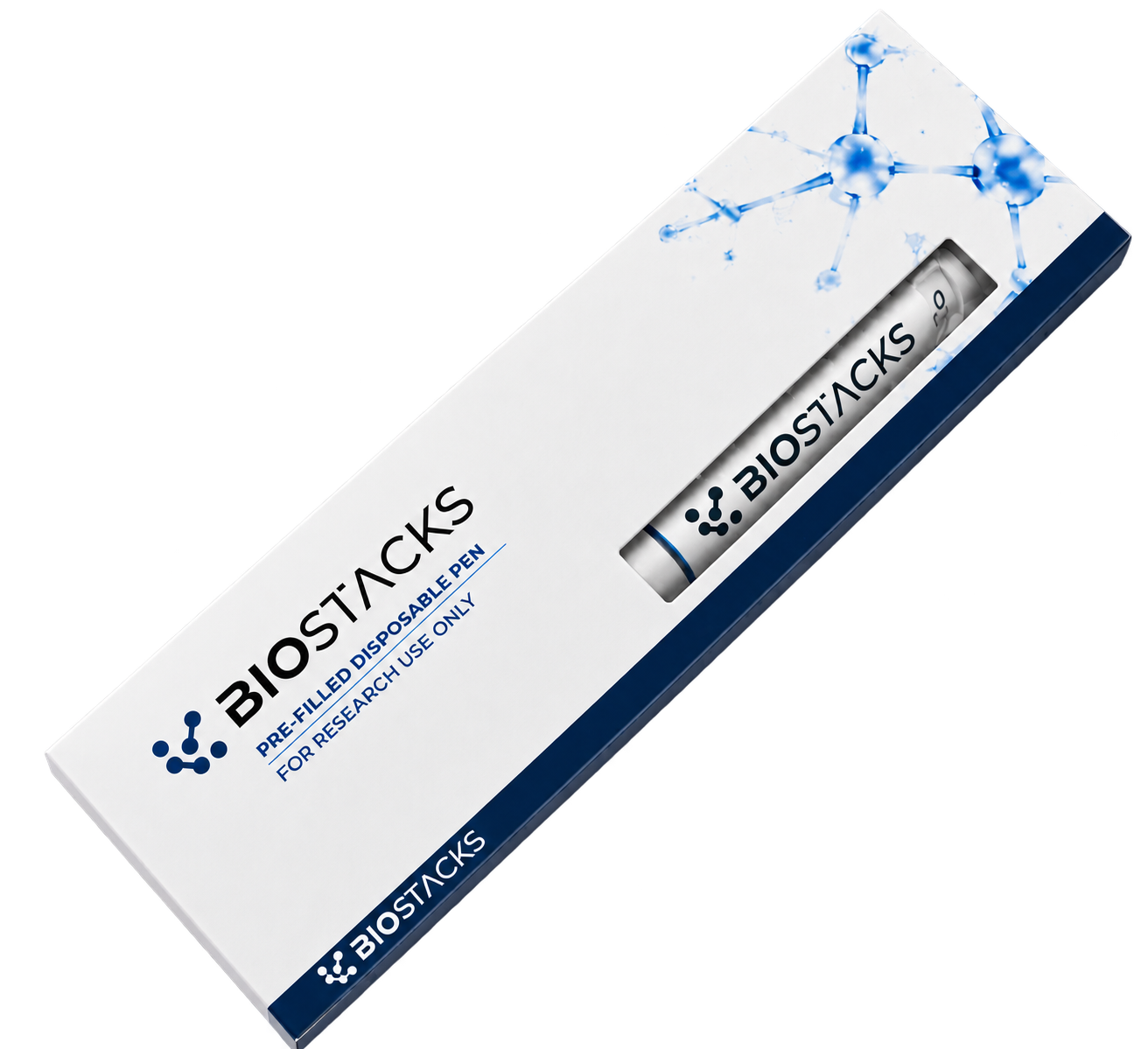
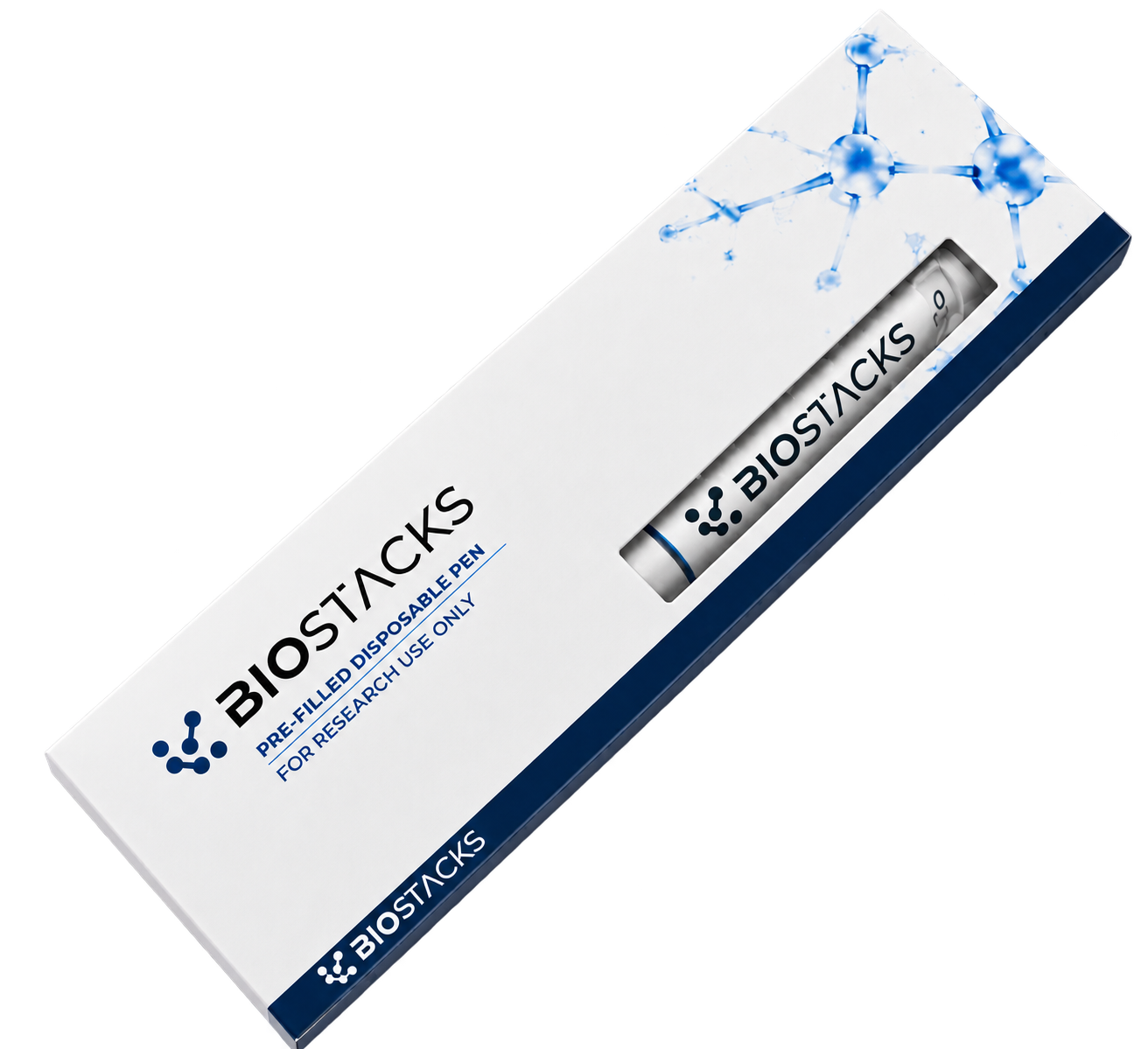
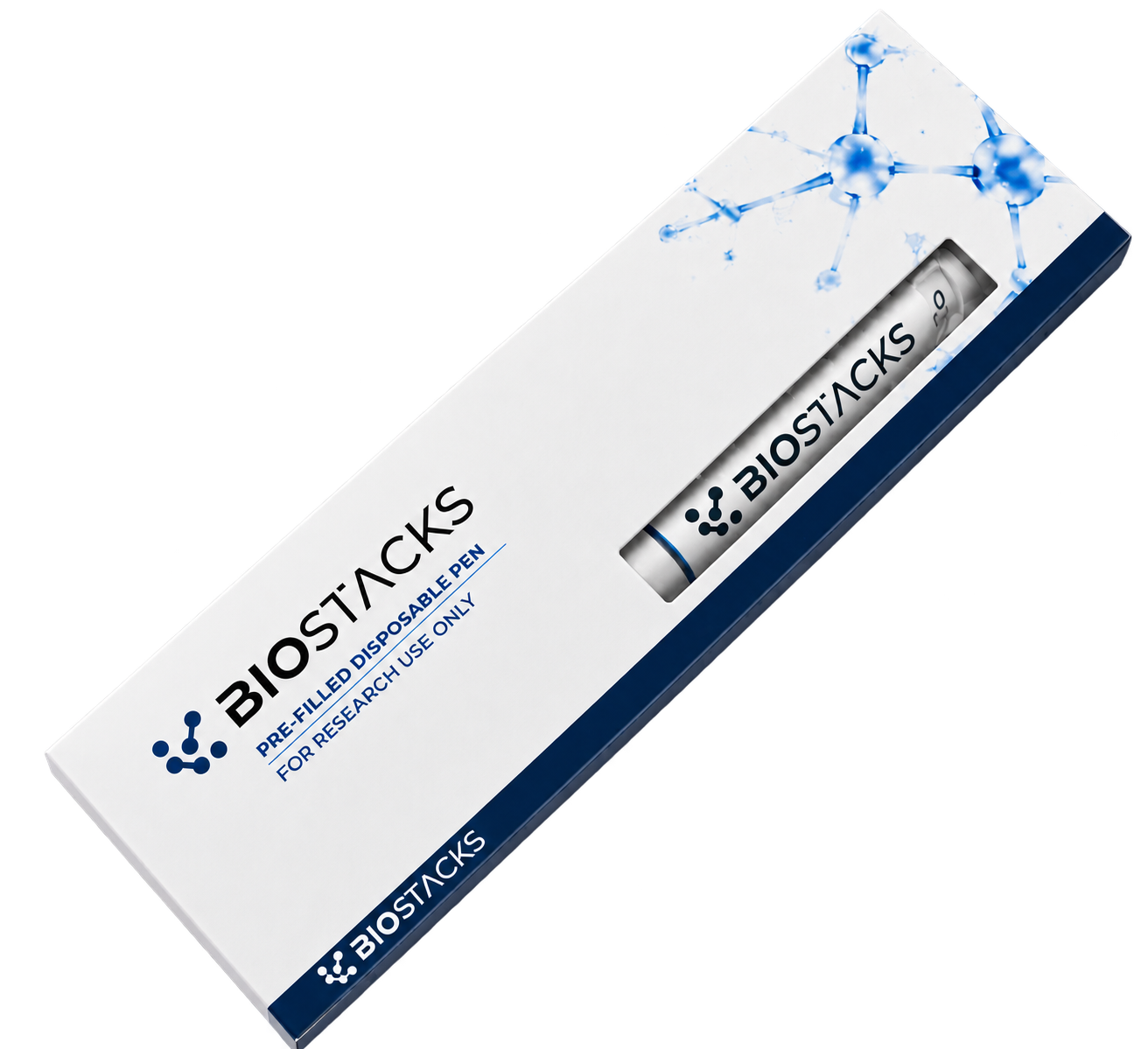
Available as a ready-to-use injectable pen — no mixing required.
Format
These products work well with Tesamorelin
Buy more, save more
Product description
Tesamorelin (TH9507, CAS# 218949-48-5) is a synthetic analogue of human growth hormone releasing hormone (hGHRH) comprising the full 44-amino-acid GHRH sequence with a trans-3-hexenoic acid group conjugated at the N-terminus. This N-terminal modification confers enhanced resistance to dipeptidyl peptidase IV (DPP-IV) enzymatic cleavage while preserving full GHRHR binding activity, making Tesamorelin a distinct pharmacological research tool compared to shorter GHRH fragments such as Sermorelin (29 AA) or Mod GRF 1-29. Supplied by BIOSTACKS as a lyophilized powder for in vitro laboratory research use. This compound has not been authorized by Health Canada for any therapeutic, clinical, or human use.
How to use it
Each vial arrives as lyophilized (freeze-dried) powder and must be reconstituted with bacteriostatic water before use in a research setting. Add the water slowly down the inside wall of the vial, then swirl gently until clear — never shake. Once reconstituted, keep it refrigerated and use within 28 days.
Open the step-by-step reconstitution guideStorage & stability
Sealed lyophilized vials are stable at ambient temperatures for 30 days and indefinitely at −20°C. After reconstitution, refrigerate at 2–8°C in the original vial and use within 28 days. Keep the vial out of direct light and avoid repeated temperature swings and agitation.
Quality & testing
Quality and purity tests are performed on random batches, covering identity (mass spec), purity (HPLC) and endotoxin results.
Browse our certificates of analysis →Shipping & returns
Orders placed before 3:00 PM ET on a business day are typically shipped the same day, in plain, discreet packaging; transit is estimated at 2–4 business days.
Read the full shipping policy →COA included
Every batch
Ships today
Order by 3PM
Free shipping
Orders over $300
About Tesamorelin
This targeted mechanism makes the peptide particularly valuable in advanced in-vitro research focused on hormonal regulation, systemic metabolic balance, visceral lipid metabolism, and complex body composition pathways. By actively promoting endogenous GH release, specialized researchers are able to deeply explore exactly how growth hormone directly influences fat distribution models, insulin sensitivity pathways, systemic cellular metabolism, and age-related endocrine changes. Its highly targeted action allows for the precise, sustained study of GH dynamics while perfectly preserving the physiological regulatory feedback loops in experimental models.
Lipid Utilization and GH Secretion Dynamics
Within contemporary scientific literature and laboratory research, this compound has been critically examined in relation to visceral fat metabolism, accelerated energy utilization, and overall metabolic signaling efficiency. These distinct pharmacokinetic properties make it an exceptionally useful peptide for comprehensive comparative studies involving other GHRH analogs, GH secretagogues, and advanced metabolic research compounds. Its highly consistent performance profile has significantly contributed to its ongoing relevance and high demand in endocrine-focused peptide research, which is widely supported by data in prominent endocrinology databases.
A major focal point for endocrinologists utilizing this compound in cellular assays is mapping its exact pharmacokinetic behavior. By featuring the addition of a trans-3-hexenoic acid group to the N-terminal of the amino acid sequence, it gains significant resistance to rapid cleavage by dipeptidyl peptidase-4 (DPP-4). In controlled in-vitro models, scientists can accurately measure how this structural modification extends the biological half-life and allows for prolonged receptor engagement at the pituitary level. The rigorous documentation of these transport and degradation mechanisms sheds light on how cellular energy reservoirs and lipid oxidation can be optimized through targeted biochemical pathways without causing severe desensitization of the receptor sites.
This premium formulation is provided in a sterile, lyophilized (freeze-dried) powder form, specifically engineered to support maximum biochemical stability, highly accurate measurement, and long-term storage when maintained under proper laboratory conditions. The substantial 10mg concentration is exceptionally well suited for extended research protocols, granular dose-response evaluations, and highly controlled experimental designs. Applying precise calculations during the reconstitution process ensures reliable molarity across research batches, offering domestic researchers ultimate flexibility across a remarkably wide range of investigative metabolic applications.
FAQ
Common questions
Each vial contains lyophilized peptide, sealed under vacuum with a butyl stopper and aluminum crimp cap. Bacteriostatic water is sold separately.
Store the sealed vial at 2–8°C in a dark environment. After reconstitution, keep refrigerated and use within 28 days.
Yes — every batch ships with a signed COA showing HPLC purity, mass spec confirmation, and endotoxin results. Download the sample COA above.
Larger vials offer the same peptide at a lower per-mg cost. Reconstitution volume scales linearly with size.